In case of separation or divorce must return the ring and jewelry received as a gift? Here is what the law says. And the common sense ♦ ︎
Looking through the album of memories, everything seems so beautiful. Him, her, the smiles, the happy moments. But love doesn’t always last long. Divorces, separations, goodbyes, are to be expected when you start a relationship.
Paris Hilton, for example, kept a $2 million solitaire that her ex-boyfriend Chris Zylka had asked for back after the breakup. Singer Ariana Grande, on the other hand, delivered the ring he had given her to her ex, comedian Pete Davidson. After all, it had only cost $93,000. So the opposite also happens: she, indignant, returns the ring. It happened, for example, years ago to the Italian footballer Mario Balotelli, who received back a ring worth 117,000 euros that he had given to the model Fanny Neguesha.

In short, among the painful aspects at the time of the separation of the couple there is also the not secondary one of the attribution of material goods. Houses, cars and, last but not least, jewelry. Yes, because there are men who demand to have back what they have given and women who feel the need to emphasize the distance taken by throwing back the engagement ring or the earrings received for their birthday. But is this attitude right? And what does the law provide?
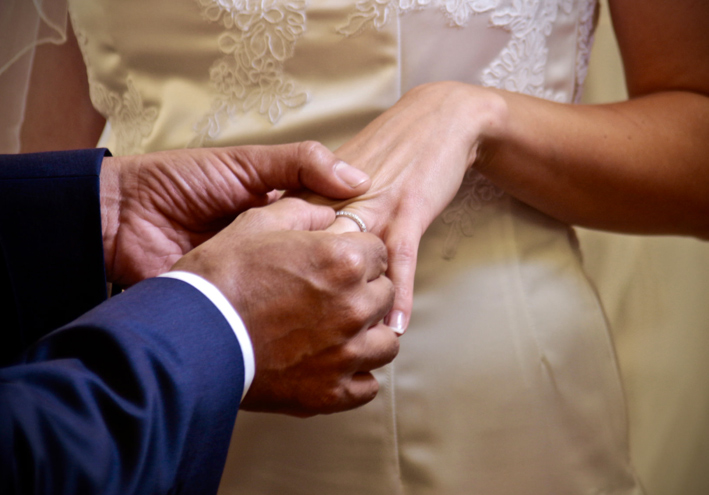
Divorces and separations
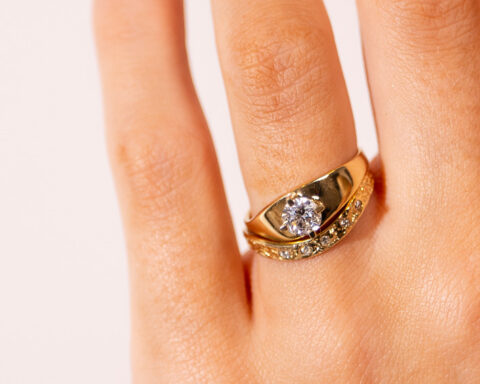
American way. The United States, from the point of view of the legal aspects for separations and divorces, is a school, but even here there is no single rule. Some examples: after her divorce from Donald Trump in 1999, Marla Maples sold her 7.45-carat Harry Winston diamond for $110,000. She then donated the money to charity, or so she said. The two-time US president called the whole thing “pretty boring.” For example, New York state law holds that an engagement that ends is no one’s fault and the ring should be returned to the donor, with a few exceptions. It’s different, however, if the couple breaks up after the wedding. And most US states have adopted this approach. But not all. In Montana, the ring is considered an unconditional gift and therefore remains with the recipient. In California and Texas, if the request for engagement and marriage is accepted, the ring becomes a sort of contract and therefore remains with the fiancée or bride in the event of separation.
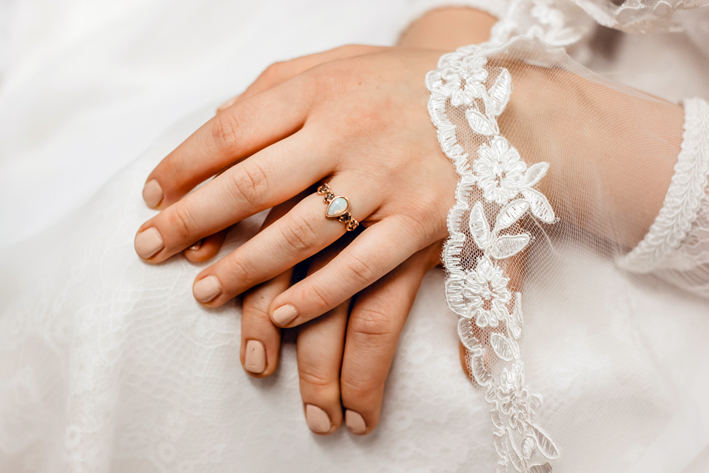
Family jewels
And in Europe? In the Old Continent, family traditions weigh more heavily than in the US. Even though in most countries gifts are gifts and, therefore, once received as a gift, no one thinks of returning necklaces, rings and earrings. In the event of a broken engagement or marriage, the jewels remain in the possession of the ex-girlfriend or wife. However, there are exceptions. One of these concerns the so-called family jewels, which are linked to ancient traditions or belonged to mothers, grandmothers, great-grandmothers. In most cases, these are not jewels of great value (unless you are Meghan Markle or Kate Middleton). However, these jewels have a very strong sentimental value not only for the person who gave them, but also for the family context behind them. In this case, even if the law does not provide for it, it is good practice to return the jewels to the ex or, better yet, to the family history to which they belong. In short, it is not provided for by the law, but by common sense.

Communion of goods and jewels
Another exception is that provided for in some countries, such as Italy, where there is the possibility of opting for the community of property at the time of marriage. This type of marriage agreement provides that all purchases made by one or both spouses after the moment of the “yes” are co-owned by the husband and wife. But Article 179 of the Civil Code lists among the assets that are not included in the legal community those of “strictly personal use of each spouse and their accessories”. Among the accessories it is easy to identify the jewels.

But, be careful: in February 2017 the Court of Cassation (the third level of judgment according to the Italian legal system) ordered the seizure of the jewels of a wife due to the crimes committed by the husband. According to the judges, “in the case of legal community of assets, purchases made after the marriage are also the property of the other spouse, unless they are assets of strictly personal use completely removed, as such, from the availability of the other”. According to the magistrates “the use demonstrates the availability of the asset by the spouse but does not exclude that of the other”. Therefore the jewels were considered common assets of the couple. But in the case, precisely, of the community of assets regime.