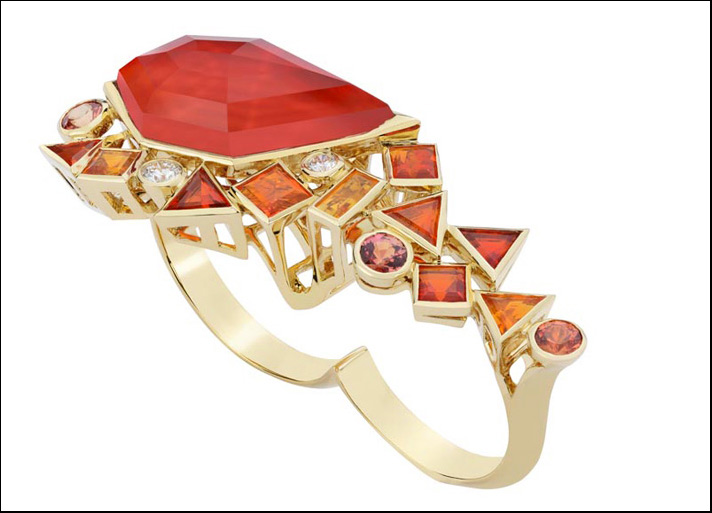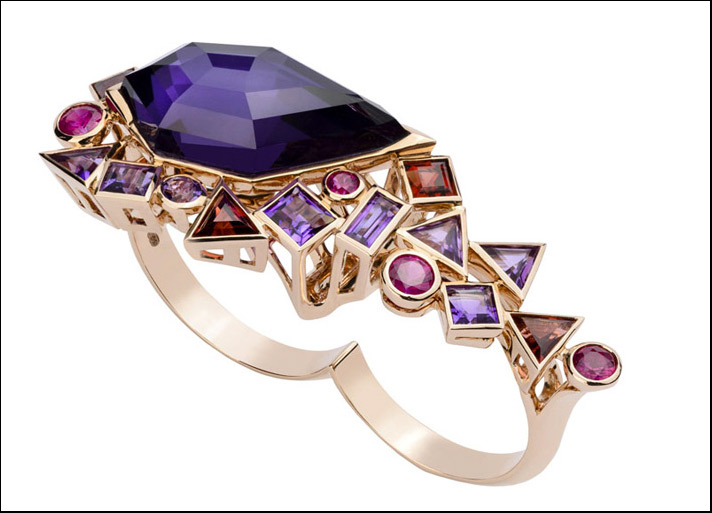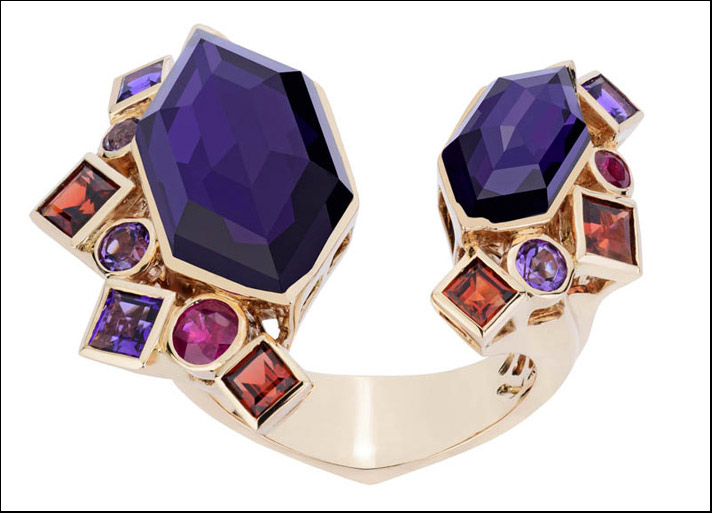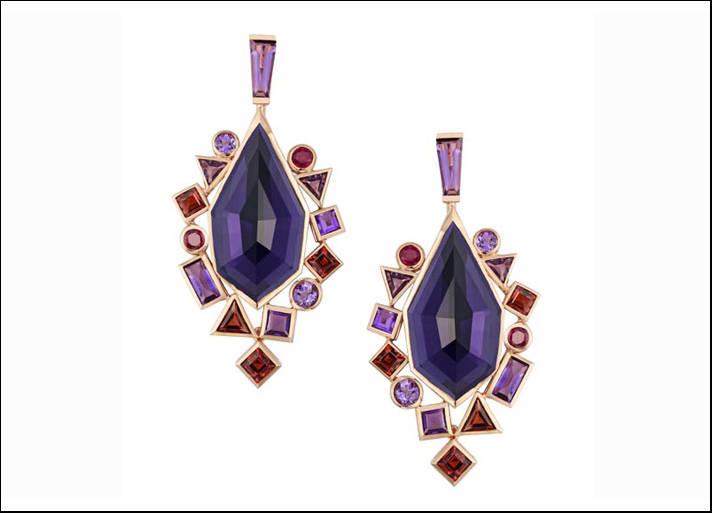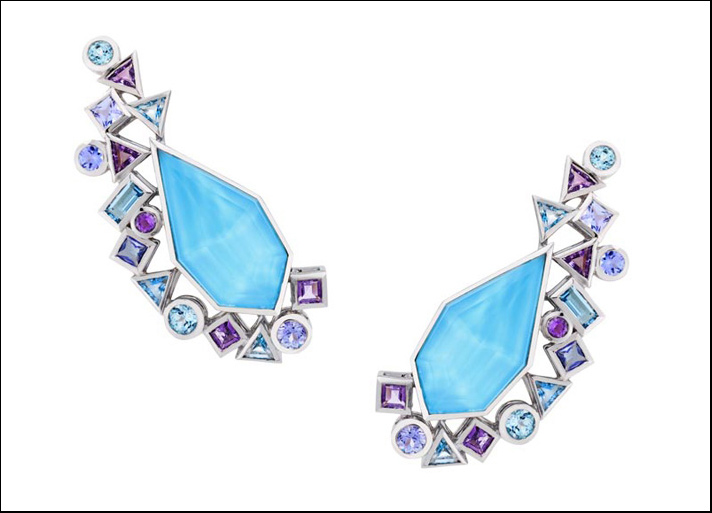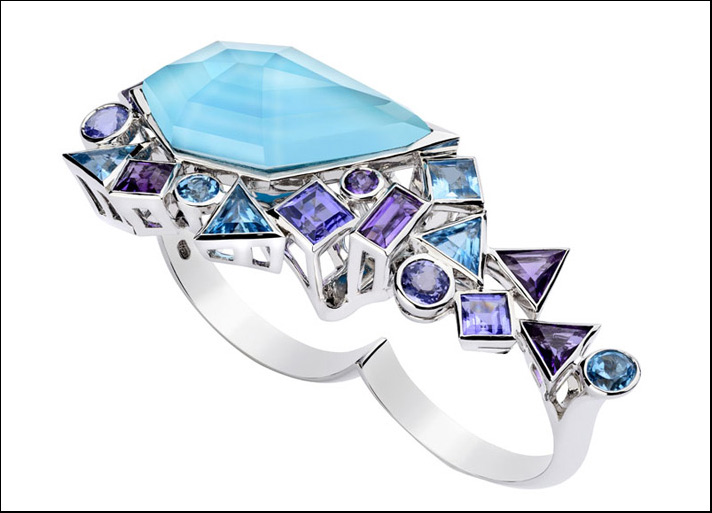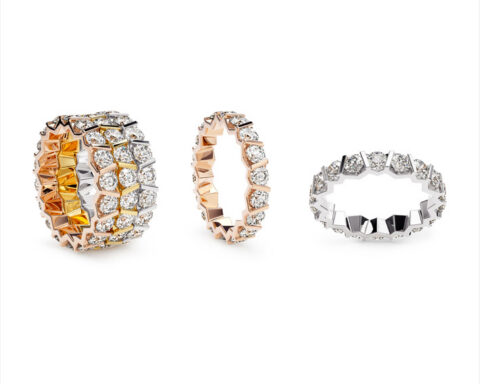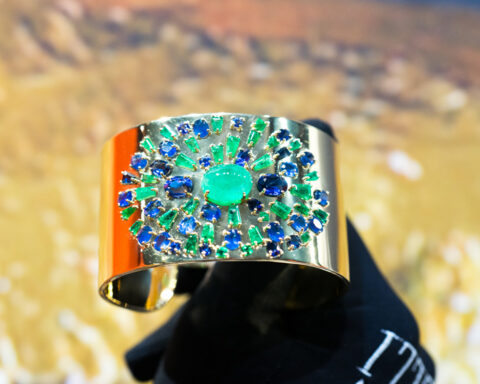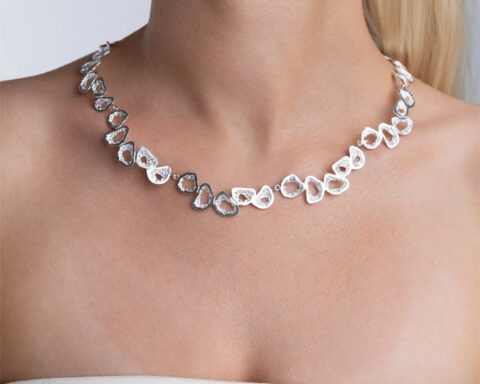
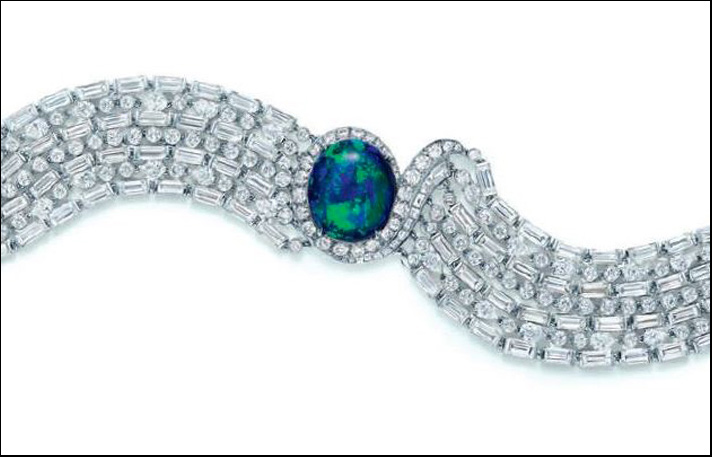
Stephen Webster is undeniably struck by gold since he has been designing jewellery for nearly 40 years, but that is not the only reason why he has named Gold Struck his new collection. He has been impressed by the discovery itself of the Cheapside Hoard, the world’s largest collection of Elizabethan and Jacobean jewellery ever found. What struck the British designer is not so much the 500 pieces of exceptional value, but the fact they was unearthed in 1912 by the pickaxes of workmen demolishing an old jeweller’s premises on Cheapside in the City of London. Kind of like discovery of oil gushing from the ground, these jewels have jumped out of a treasure box. In Webster collection dominate amethyst, topaz, tanzanites, rubies, fire opals and sapphires, the same stones of the hidden treasure. But these are set in diamonds, triangles, rectangles, rounds, in short, multi-shaped and sized that orbit harmoniously around a hexagonal, faceted irregularly center stone as if just dug up. The color combinations for ear climbers, two-finger or opened rings, traditional pendants or bracelets, are like Webster’s edgy aesthetics, that is whimsical and robust: the red version with corals, fire opals, diamonds and orange sapphires, the purple one with amethysts, rubies and rhodolite, and the blue one with turquoises, amethysts, blue topaz and tanzanite. Matilde de Bounvilles