
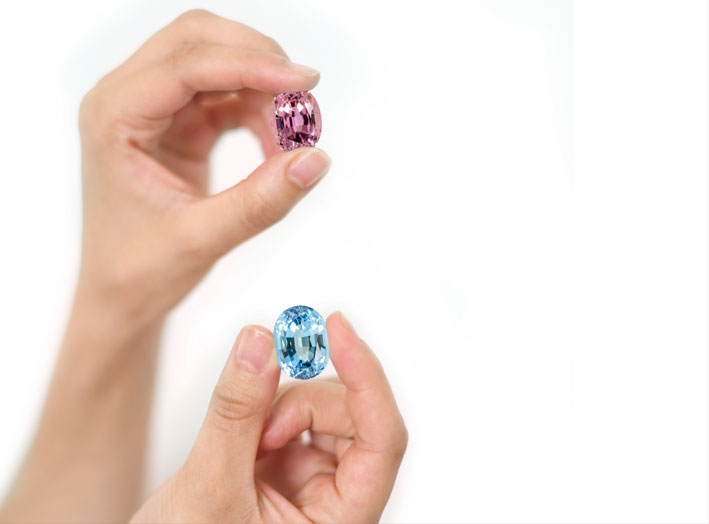
How to recognize a real stone from a fake? Some tricks are often used for jewels and can deceive those who are not experts. Here’s what to check ♦ ︎
Beware of fake stones. But also those that are only half-fake. You may not know that there are many ways to simulate precious stones on jewelry, and just as many ways to make a stone appear more interesting than it actually is. Naturally, the greatest risk lies in purchasing a piece of jewelry without the usual guarantees and certification from a gemological institute. Or suspicion may arise over an old family jewel whose provenance is unknown. Here are some things to consider.
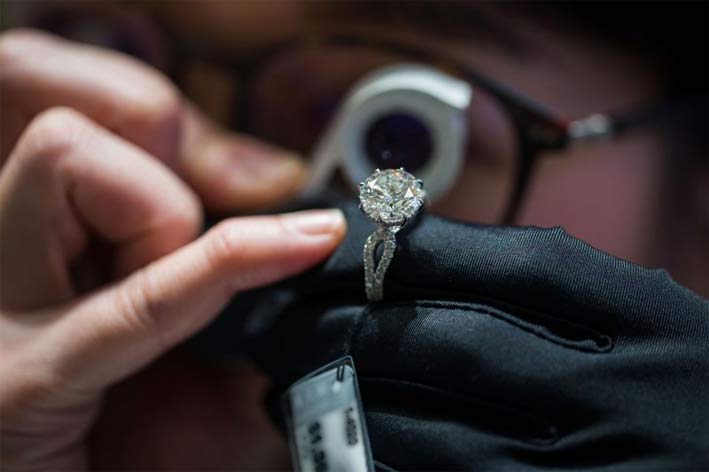
Fake stones
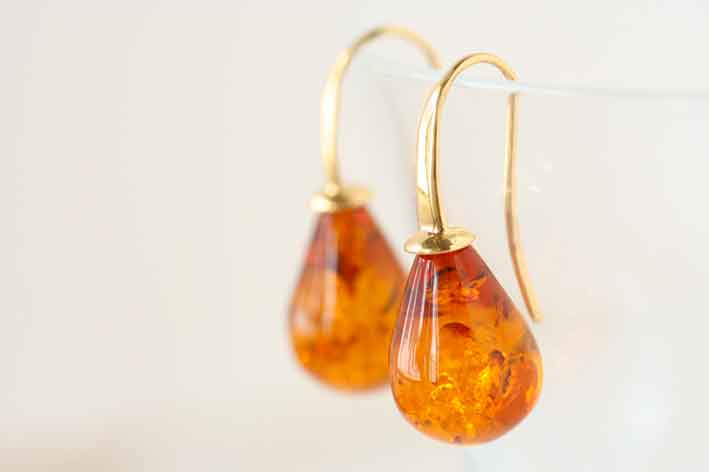
Plastic and glass are materials often used to simulate precious stones. Today’s technology allows us to create in the laboratory something that is indistinguishable to the eye from natural stones, such as rubies, emeralds, or fossilized resins like amber. Naturally, an experienced jeweler or specialized laboratory can identify whether the stones are genuine or imitations. If in doubt, seek expert advice.
Artificial Stones
Cubic zirconia and synthetic moissanite (natural, rather rare, versions also exist) are two lab-created stones that, at first glance, have characteristics similar to genuine gems, such as diamonds. Similar, but not the same. Naturally, if you’re selling them, they have a very low value, but when it comes to purchasing them, only a gemologist or a close examination can distinguish cubic zirconia, often passed off as zirconia, from a natural stone. How can you be sure you’re not being scammed? Simple: a diamond, even a small one, always has a certificate attesting to its characteristics such as transparency, color, clarity, and, of course, carats. Cubic zirconia, however, does not.
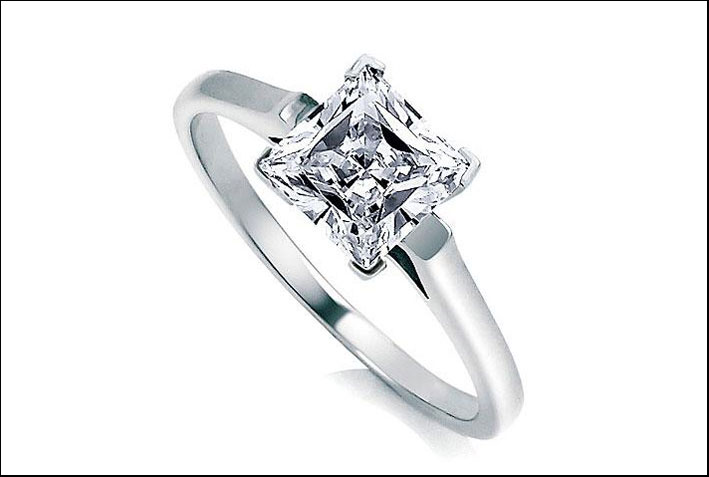
How can you tell a real diamond from a fake?
The only sure way to verify its authenticity is to consult a jeweler or gemologist for an analysis using professional instruments.
However, other home methods are popular for determining whether a diamond is real or fake. Be careful: they can give an indication, but the result is not guaranteed.
Fog Test
Hold the diamond to your mouth and breathe on it. If a layer of condensation forms that disappears instantly, the stone is likely genuine. If the stone remains fogged for a few seconds, it is a fake (like glass or zirconia).
Line or Print Test
The stone should not be mounted in jewelry. Place the stone with the flat side facing down on a piece of paper with a black line or text. In a real diamond, the high refractive index bends light, preventing you from seeing clearly through the stone; If you can read the letters clearly, the stone is an imitation.
Brilliance Method
A diamond reflects white light (brilliance) combined with multicolored highlights called fire. Many imitations exhibit an excessive rainbow effect or appear optically different.
Magnifying Glass
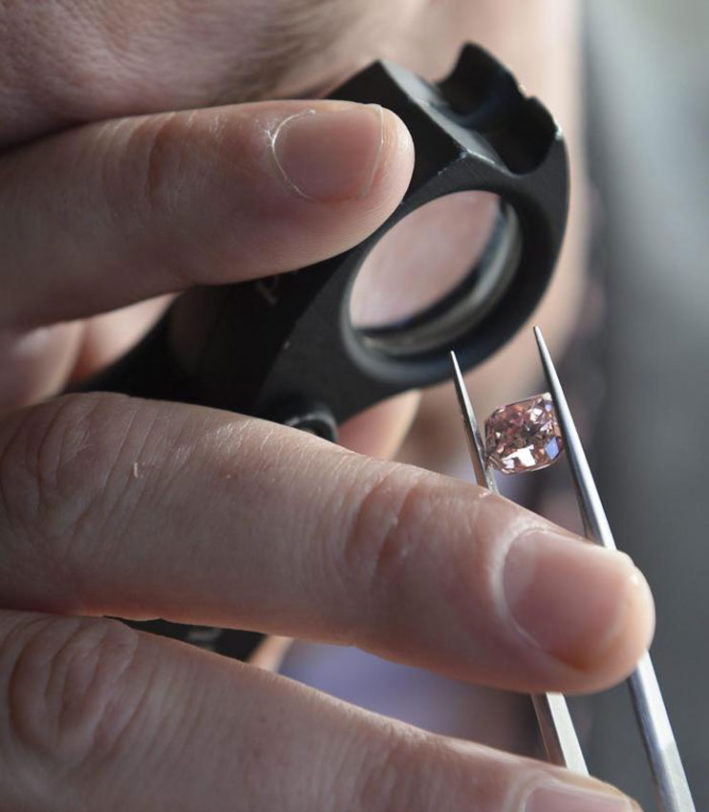
When examining the interior of the gem with a 10x loupe, a natural diamond almost always has tiny inclusions or unique imperfections, while a cheap glass or synthetic fake often appears flawless or exhibits internal air bubbles.
Gemological Certificate
The best proof of a diamond’s authenticity is a certificate issued by a recognized institute (such as GIA, IGI, or HRD) that lists the stone’s characteristics.

Composite Stones
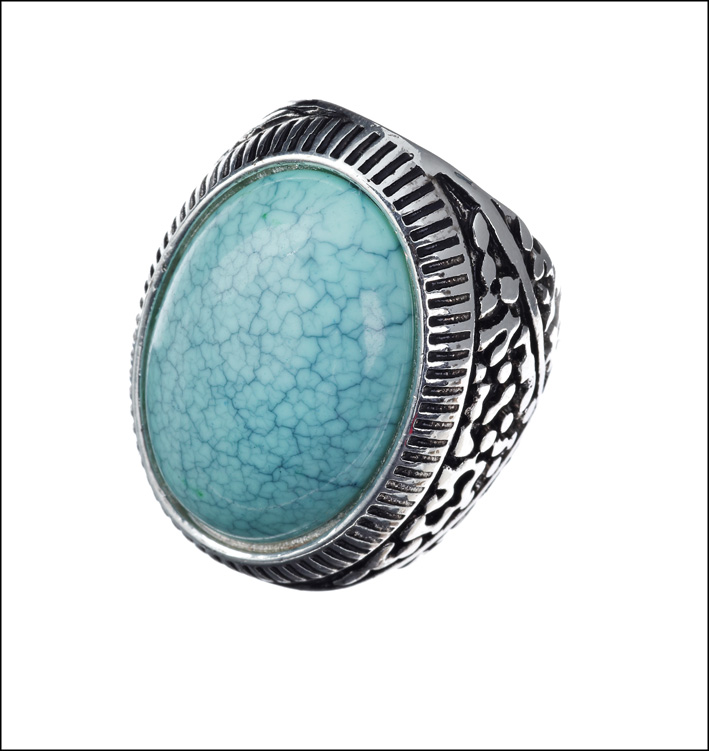
One trend among jewelers is the idea of layering different stones or materials. This is a way to reduce costs: a kind of sandwich of different stones is created: the most valuable one is on top, and the one used to create thickness is on the bottom. The goal is to make the stones used on the surface appear larger by adding an imitation or a cheap gemstone, perhaps on the lower part of the stone, hidden by the setting. This system is less common for transparent stones, but is more commonly used for opaque ones, such as opals or turquoise. Sometimes the authentic stone is just a thin layer glued onto a less valuable mineral. Another approach, however, involves transparent stones. To achieve an interesting shade, one trick involves gluing two or three different stones together with a special invisible adhesive, making them appear as one, transforming it into a “precious” stone with a captivating shade. The best brands make no secret of this practice. But how can you avoid scams? In addition to relying on a brand you trust, it is a good idea to carefully observe the workmanship of the jewel, perhaps with a magnifying glass.0

Fancy Stones
Another idea for those who don’t want to be transparent with jewelry buyers is to change the names of the stones. If you read that a ring has an “oriental emerald,” for example, know that it’s a green sapphire, which is less valuable. Other examples: an “American ruby” is actually a garnet, which is worth much less. And what about “Australian jade”? It’s simply treated quartz. Conclusion: when you read exotic names for stones you’ve never heard of, check Google. Or Gioiellis.com, of course.

Reconstituted stones
There are stones that are stabilized or rebuilt, as often happens in turquoise. Stabilization consists in subjecting the stone to a pressure to make it more compact and eliminate the chalky consistency. Furthermore, often turquoise or other soft stones are reconstituted by mixing powder with a binder. In short, they are a kind of pasta, to which dye is often added, to make the color more vivid.
How to defend yourself
It is not easy to recognize these tricks. A very low price is already an indication that something is wrong: no one will give you for less money a precious stone and the probability that a jeweler offers substantial discounts on an emerald, diamond or ruby is as rare as water in the desert. The certificates, for very expensive stones, are a good start to avoid the purchase of fakes. The opinion of a jeweler who can guarantee the authenticity of a jewel is another element to keep in mind. Finally, greater security can it guaranteed by a expert gemologist.





Your article is interesting, honest. Thanks.
Thanks to you for following us!