Do you love jewelry? Perhaps you would like to create it yourself and become a jewelry designer. Here is how you can go about it ♦
Before explaining how to become a jewelry designer, a preliminary note is necessary. The job market and the jewelry and goldsmithing sector vary from one country to another; conditions are not the same everywhere. However, there are some common trends. One general trend is the decline in physical retail locations, with online sales increasing—even for jewelry. Furthermore, a challenge faced by jewelry manufacturers and retailers is the difficulty of generational succession. While the value of gold and silver continues to rise, there is a shortage of specialized professionals within jewelry companies. This is not the case everywhere, but it is the situation in many countries.
How to create a jewelry brand

The Market Situation
A snapshot of the market in Italy can help illustrate this. According to data from Federpreziosi Confcommercio, there are approximately 11,842 businesses in Italy (as of 2026) engaged in the retail trade of watches, jewelry, and silverware. This represents a decline of over 780 shops—an average of about 65 closures per month—compared to previous years. Driven by record-high prices for raw materials and gold, as well as broader economic challenges and a drop in domestic consumption, many artisanal workshops and traditional stores have seen their earnings shrink. They also face stiff competition from large-scale retailers, chain stores, and e-commerce. As mentioned, there is also a shortage of young artisans and master goldsmiths, partly due to the reduction in specialized vocational schools and the difficulty of passing on traditional manual skills.
Other professional roles
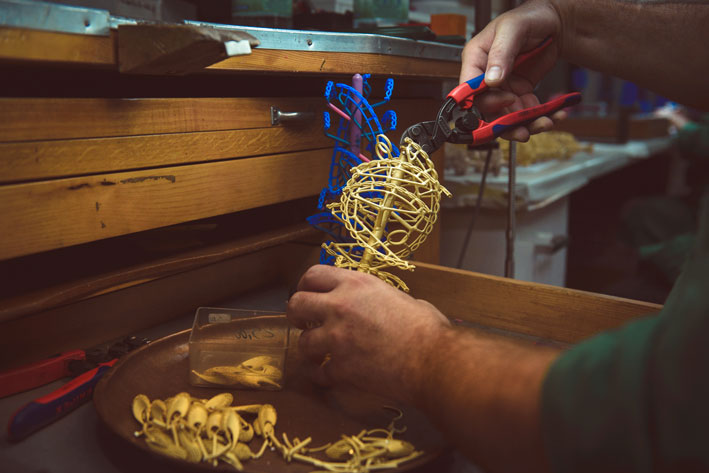
This preamble serves to clarify one point: becoming a jewelry designer can be highly rewarding—it is a profession that showcases your creativity, which is then translated into tangible, valuable objects. However, it is not an easy path. In any case, if you are interested in the world of jewelry, historic jewelry-making districts—such as those in Valenza or Arezzo in Italy—are constantly seeking various technical professionals, including stone setters, goldsmiths, and international sales specialists (with average gross annual salaries for senior roles or export managers ranging from 42,000 to 64,000 euros). These job openings can be found through portals specializing in the fashion and luxury sector, LinkedIn, recruitment agencies, or by applying directly to independent companies.
Becoming a Jewelry Designer
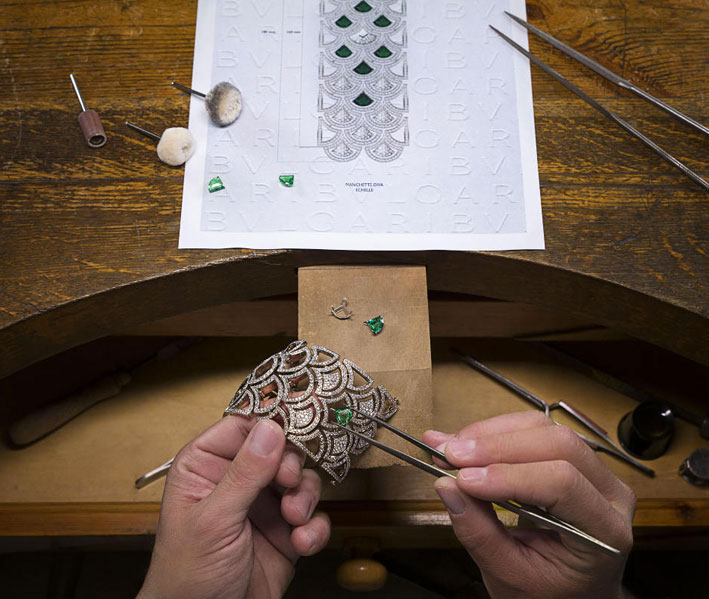
To become a jewelry designer—whether you work independently or for a company—you need a blend of artistic creativity, knowledge of materials, and both digital and artisanal technical skills. One essential skill is the ability to create drawings and sketches; you must be able to draw freehand to translate an idea into initial sketches and technical views (such as axonometric projections and exploded views). But that is not enough. Today, jewelry is also designed using computers, through 3D modeling and CAD (Computer-Aided Design) programs. You must therefore learn to use digital software—such as Rhinoceros, Grasshopper, ZBrush, or Gemvision MatrixGold—to create three-dimensional models and high-definition renderings.
Furthermore, an in-depth knowledge of materials is required: you cannot design jewelry without understanding, for instance, the challenges of working with titanium or the specific characteristics of various gold alloys. In short, you need to study precious metals (gold, silver, platinum), gemstones, and gemology, as well as techniques such as stone setting and investment casting (micro-casting).
Theoretical Knowledge
Before expressing your creativity, you must determine whether your ideas are truly original or if you are simply proposing a piece that has already been seen. This is why it is necessary to study the history of jewelry. Once you understand the evolution of jewelry forms and… …the use of gemstones, the discussion moves on to analyze current fashion trends and the demands of luxury brands.
Design Schools
In every country, there are specialized schools and training programs for learning the art of jewelry making. In Italy, for instance, there are institutions such as the *Scuola di Oreficeria e Arte Orafa* (School of Goldsmithing and Goldsmithing Art), as well as targeted courses and master’s programs offered by institutions like IED, Poli.design, the *Accademia delle Arti Orafe*, or the *Accademia Italiana*. Furthermore, the workshops of certain companies also serve as excellent schools, allowing one to learn the secrets of the trade directly in the field. In Italy, traditional goldsmithing workshops are primarily located in the historic districts of Vicenza, Valenza, Arezzo, and Florence.