
Do you really know what a bezel means and what it is? And how is a ring with a stone set made? Here are the things you need to know about bezel rings ♦
Things to know if you like jewelry and you are not a jeweler. Do you know what a bezel is? What is a set with stone? Do you have a ring with a stone set in a bezel? If you are curious about what a jewels setting is, read here.

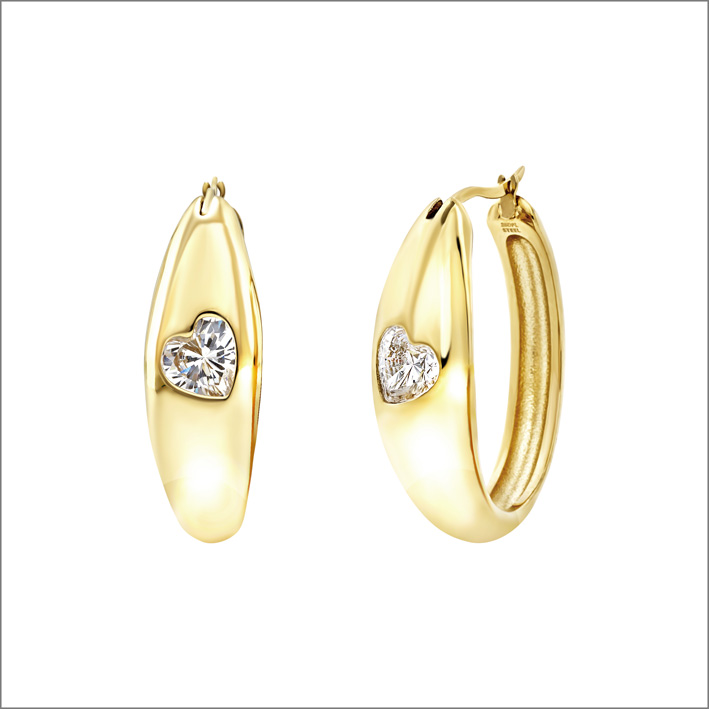
Hold the stones. The bezel, or casing, is a mount that serves to hold a stone in place, especially if it has a cabochon cut, that is, with a faceless cut, often hemispherical. The bezel consists of a metal protection that fixes the circumference of the stone. It can be formed by a cavity around which turns a thin metal border that folds over the contour of the gem or, in open frames, from small jaws, which hold the stone in several places. The bezel is positioned in the visible, upper part of the ring and frames the stone which, in this way, remains still. There are different techniques of setting, but all have in common the metal fixing, in silver or gold, which is welded and surrounds the stone. The gem may be more or less positioned in the hollow of the metal. Jewelers today tend to adjust the metal to the size of the stone to be set, following the external shape.

The height of the edge. The setting can vary in the size of the metal belt that wraps the stone, which can be more or less enveloping, usually about 0.5 millimeters. In the case of diamonds, for example, we tend to keep the metal as thin as possible. The advantage of a setting like a bezel rather than a claw one is that the stone is more protected in this way and is less likely to be damaged. Once the stone is placed in the hollow and surrounded with the metal band, the bezel can be welded to the ring band. The base, in some cases, is eliminated to leave room for the only band that stops the stone.

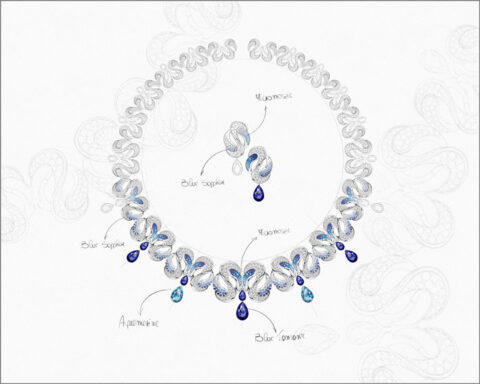
When the setting is not seen. There is also an invisible setting. It is a particular technique used to fix precious stones so that the metal support structures are not visible. In French this technique is called serti mystérieux (mysterious setting), and was introduced by Alfred Langlois in 1930. Later, the two French jewelers Salomon Arpels and Alfred Van Cleef, founders of Van Cleef & Arpels, elaborated with Langlois the original idea until requesting the patent of the new casing. Cartier also patented a technique for an invisible bezel, called the invisible serti, but without major developments. Van Cleef & Arpels, instead, continues to use the mystérieux serti in his jewels.

How can you tell if a piece of jewelry’s setting is well-made?
Use a magnifying lens with at least 10x magnification—the kind jewelers use.
- Check the fit and continuity of the edge
The outline should be uniform: the metal of the setting must sit perfectly flush against the girdle (the outer edge) of the gemstone all the way around, with no gaps, slits, or visible space between the stone and the metal. The thickness should be consistent; the edge securing the stone should be uniform, rather than thicker in one spot and filed down or too thin in another. - Stability of the gemstone
Ensure the stone is secure: apply light pressure to it using your fingertip, a toothpick, or a pair of tweezers (taking care not to scratch it). The gemstone should not move, rotate, or wobble within its setting. - Check the finish
The piece should be free of burrs or file marks. The metal surrounding the stone should be smooth—whether polished to a high shine or given a satin finish—and free of scratches or residue from polishing compounds. Also, be sure to examine the back of the piece. Some settings are left partially open or pierced at the bottom; this allows light to pass through the gemstone, enhancing its brilliance, and also makes cleaning easier. If the back of the setting is closed, the inner metal surface should be clean and free of imperfections. Check that the metal edge has been burnished or pressed down neatly and evenly against the stone, with no irregularities. - Geometry of the piece
The shape of the setting should correspond to the volume of the gemstone. The setting for a gemstone—whether round, oval, pear-shaped, or heart-shaped—must perfectly follow the stone’s outline. If the setting appears even slightly crooked or asymmetrical, the craftsmanship is not up to standard. The solder joint must be free of any visible imperfections or porosity.