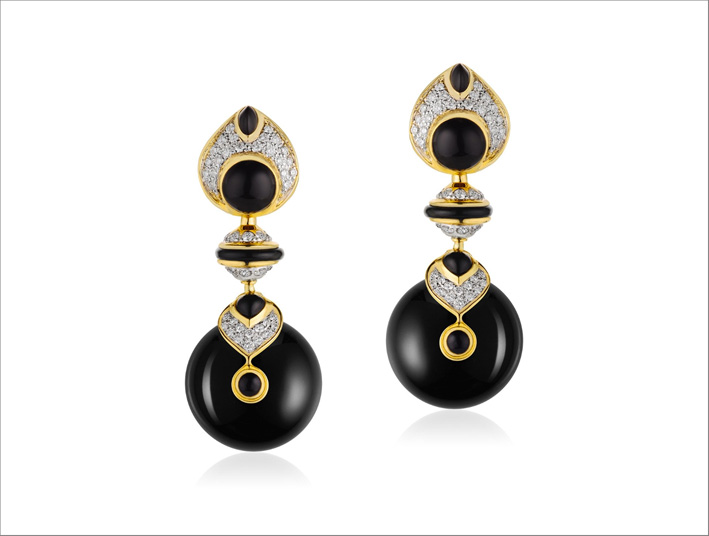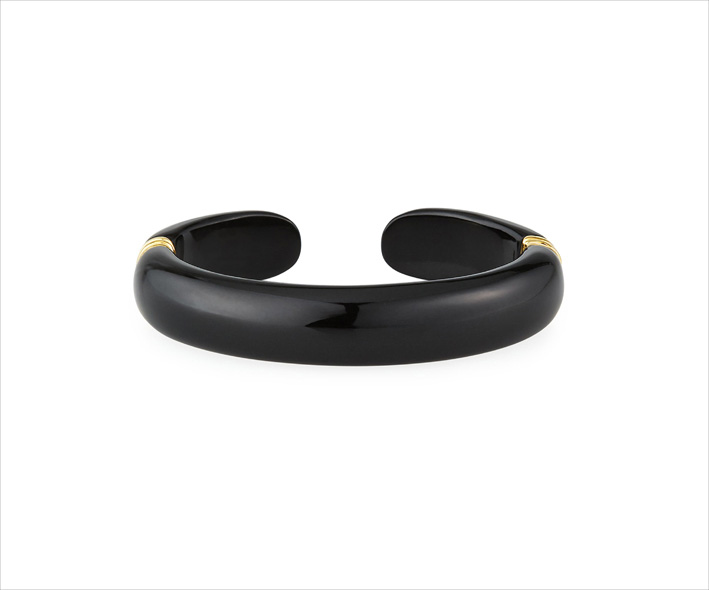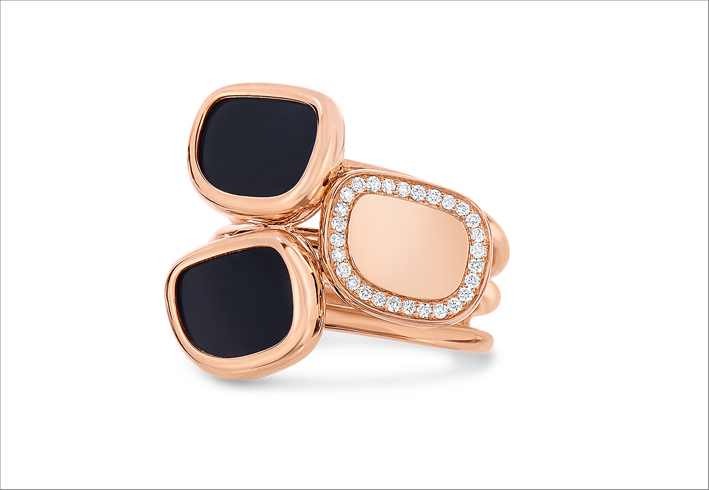
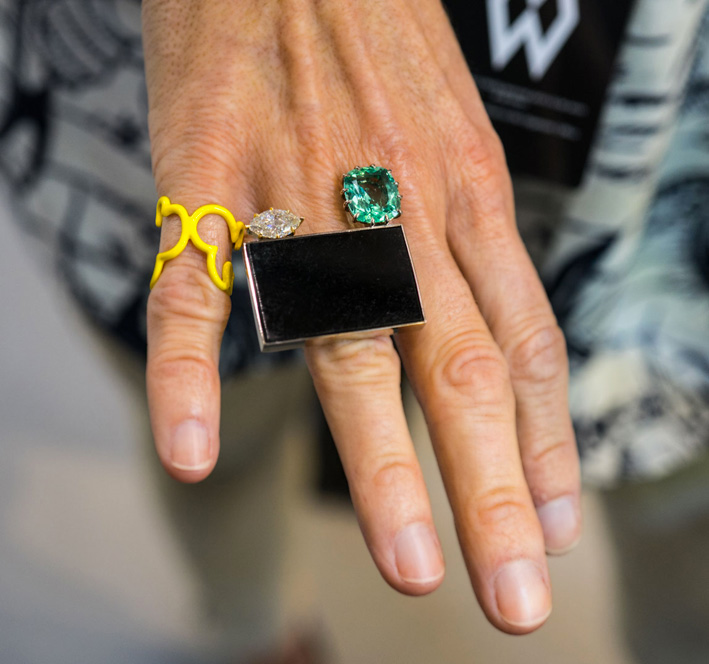
The black jade, charming stone that wants to ascend on the diamonds throne.
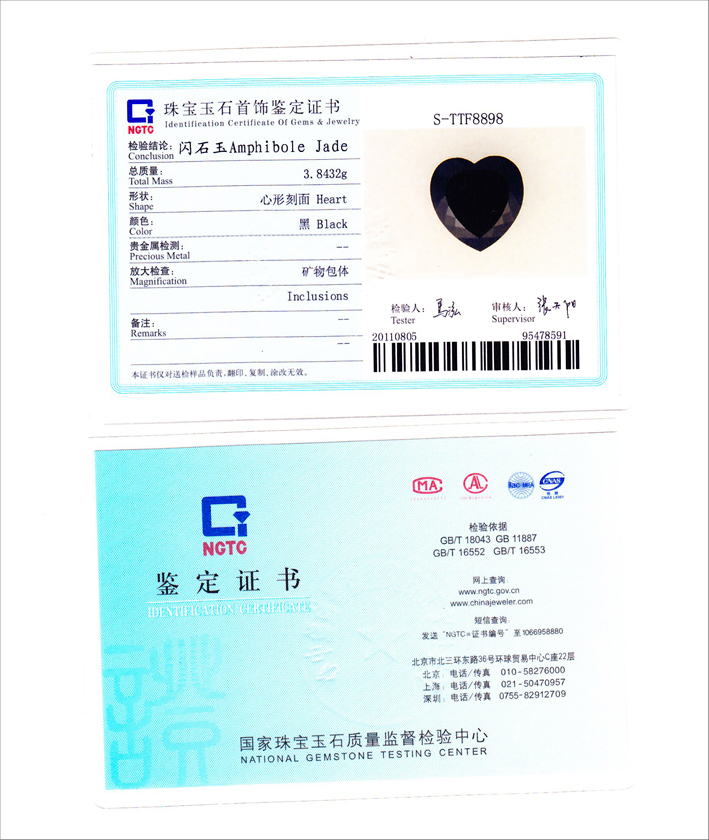
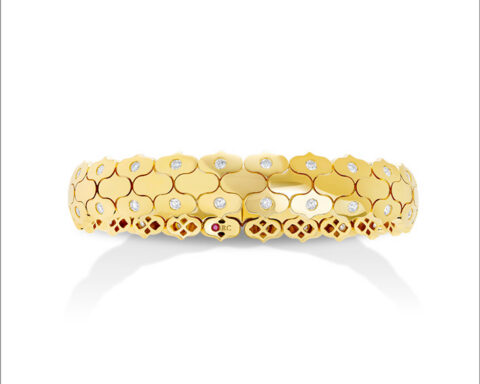
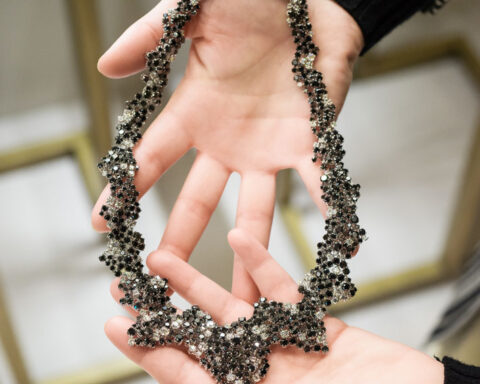
Roberto Coin has chosen it for his collection Black Jade: this stone could have a wide diffusion, assuming that if you find a sufficient quantity. To propose this valuable material is now Kings Stone US, a New York company that owns the rights of import to the US. To guarantee the quality and the characteristics of this stone are the National Gemstone Testing Center (NGTC), Chinese institution with the official license, and two American organizations, the American Gemological Laboratories (Agl) and the International Gemological Institute (IGI). The black jade which is proposed, however, does not come from China, but from a mine in South Africa of owned by King Stone, even though the certification of authenticity is the prerogative of NGTC, the leading authority on the subject.
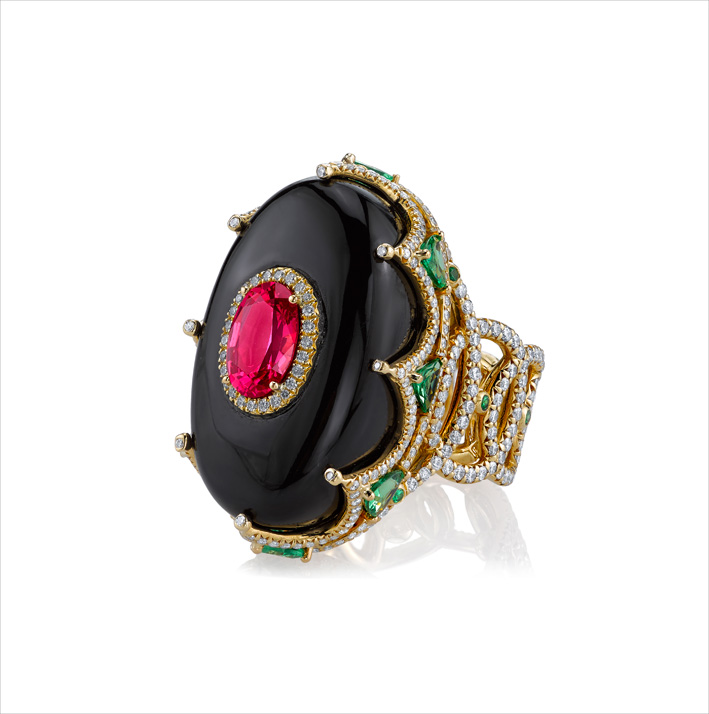
The characteristics presented for this stone (it is jadeite, not nephritis) are relevant: is shining like a diamond and has a hardness of 7.5 to 8.5 on the Mohs scale, more or less so as an emerald or topaz (the Diamond is 10 ranked). In addition, according to King Stone, jade is an alternative to the “blacks treated diamonds”, since it is a stone from the natural color, glossy, and consistent as a precious stone. To the naked eye, it appears intensely black, but shining a strong light on finer pieces often reveals a deep, luminous green hue. Its hardness ranges between 6 and 7, making it exceptionally durable. It polishes smoothly, waxily, or vitreously, with jadeite generally achieving a higher brilliance than nephrite.
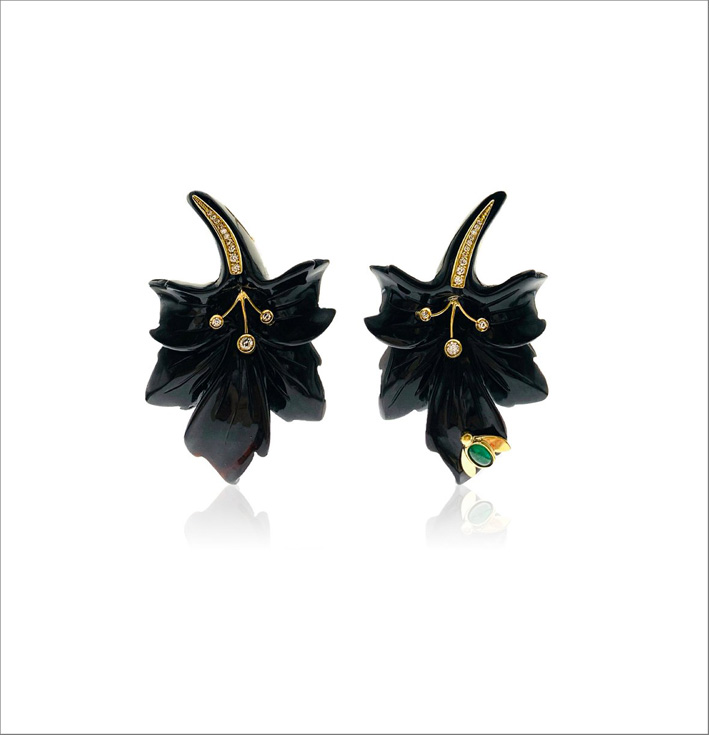
How can you distinguish real black jade from imitations, such as onyx or obsidian?
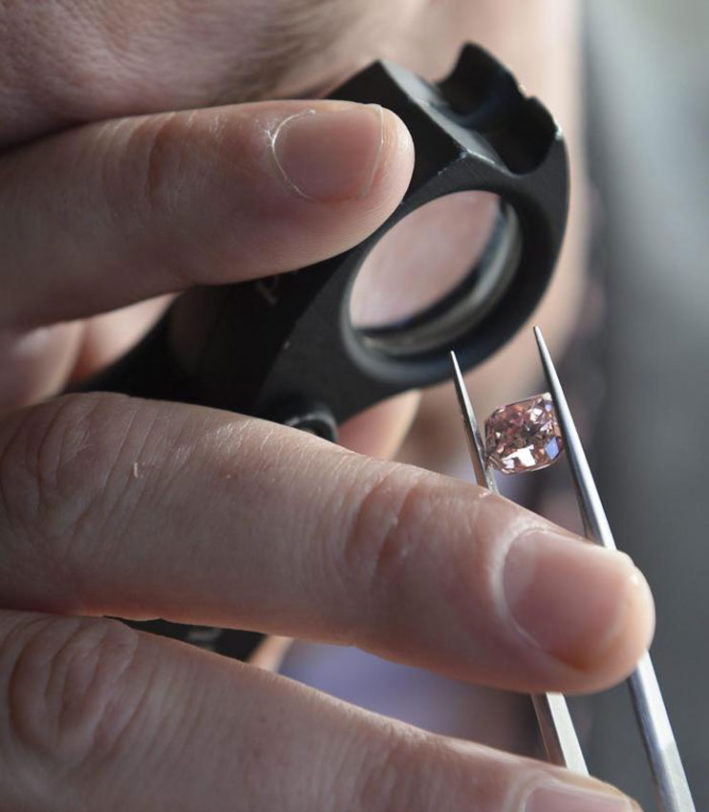
To distinguish real black jade from imitations and similar stones such as black onyx and obsidian, you need to analyze its reaction to light, specific gravity, and surface luster.
Here are some practical and immediate methods to avoid confusing them:
1. The Flashlight Test (Transparency and Shades)
• Black Jade: When shining a bright light (such as a smartphone flashlight) directly on the stone, the edges or thinner sections will almost always reveal a deep green, brown, or olive hue, due to the presence of internal minerals.
• Obsidian: Being volcanic glass, it is partially translucent. Light will pass through the edges, revealing a uniform smoky gray color or, in rare cases, golden/rainbow highlights, but never the typical internal texture of jade.
• Black Onyx: It is completely opaque. Light cannot penetrate the stone and will not display any type of shimmer or secondary color.
2. Specific Gravity (The Palm Test)
• Black Jade: It has a very high density (approximately 3.0 – 3.3 g/cm³). If you gently drop it into the palm of your hand, it will feel noticeably heavier than its size suggests.
• Black Onyx: It has a medium weight (about 2.6 g/cm³), feeling standard to the touch.
• Obsidian: It is very light (about 2.3 – 2.5 g/cm³). In the hand, it almost feels like a piece of hard plastic or ordinary glass.
3. Luster and Fracture
• Black Jade: It has a waxy to greasy luster (typical of nephrite). If broken, its internal fracture is granular or fibrous.
• Obsidian: It has a glassy, reflective luster, similar to a mirror. When chipped, it exhibits a typical “conchoidal” fracture (curved, smooth, and sharp edges like a piece of broken glass).