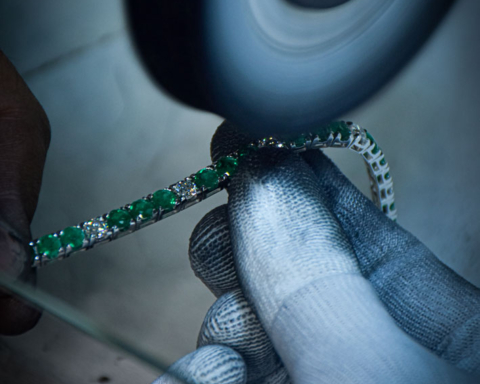
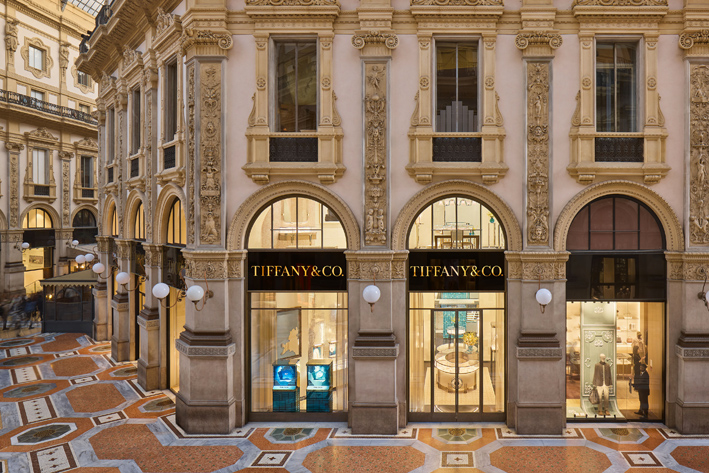
A new, maxi boutique for the American fashion house has opened in the Galleria Vittorio Emanuele.
Tiffany & Co. is doubling its Milan location. Less than a year has passed since the American brand’s maxi store opened on Via Monte Napoleone. Now, Tiffany is opening a new store in the historic Galleria Vittorio Emanuele II, a must-see for tourists in the city: approximately 10 million by 2025. What is considered Milan’s living room now boasts a second boutique, inspired by The Landmark, Tiffany’s iconic Fifth Avenue flagship store. It extends over two floors and a mezzanine, with a design deeply influenced by Italian modernism. The Galleria’s covered walkways meet under the central dome. Above, the space between the covered walkways is marked. Tiffany & Co. is also the first American fashion house to open a space in the Galleria, and is located beneath one of the four lunettes of the Galleria’s octagon, created in 1867, depicting the continents of Europe, Asia, Africa, and America, beneath which the boutique is located.

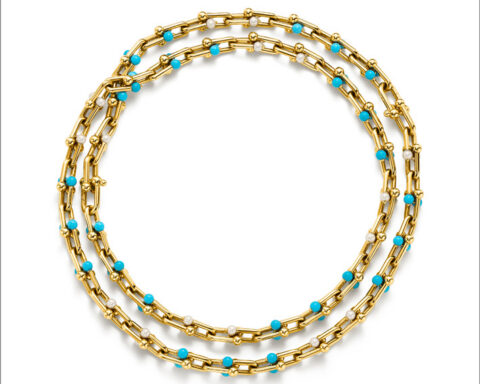
The façade echoes the Galleria’s signature arched windows and refined stonework. The window displays, inspired by the celebrated Italian artist Michelangelo Pistoletto, play with color and metallic elements to showcase the Tiffany & Co. collections. Underscoring the store’s connection to the region, the displays are crafted with handcrafted glass tiles made in Italy. At the entrance, an area dedicated to Tiffany Icons features iconic collections such as HardWear by Tiffany, Lock by Tiffany, T by Tiffany, and Knot by Tiffany. The exhibition concept was developed in collaboration with Studio Piva. In this space, a ceramic installation in various shades of blue captures the eye. The work, by New York artist Peter Lane, features the Tiffany Blue Box with silver details and the House’s iconic Bird on a Rock motif.

The ceiling, designed by Hugh Dutton & Associés, is curiously inspired by the Tokyo Parliament building. Four mosaic panels from Tiffany Studios, originally commissioned for Marshall Field & Company of Chicago in 1914, are integrated into the skylight. Created under the direction of Louis Comfort Tiffany, son of Tiffany & Co. founder Charles Lewis Tiffany and the house’s first art director, they depict the zodiac signs in Favrile glass in shades of purple, green, blue, and brown. Throughout the space, materials and light create a magnificent interplay of contrasts. The jewelry displays are covered in a precious metallic fabric, and the geometrically patterned silver resin niche highlights the jewelry arranged on custom-made cast glass inserts by Venini, the world-famous Murano glassmaker. The geometric designs and Venini cast glass tiles provide a sense of continuity as one moves into the adjacent gallery dedicated to Elsa Peretti. In this space, one can admire Pistoletto’s pair of works, Color and Light, 2016. In a tribute to Italian design, the Elsa Peretti gallery features one-of-a-kind jewelry created specifically for this store. Elsa Peretti’s creations are displayed in a special display inspired by Gio Ponti and created in collaboration with Venini.
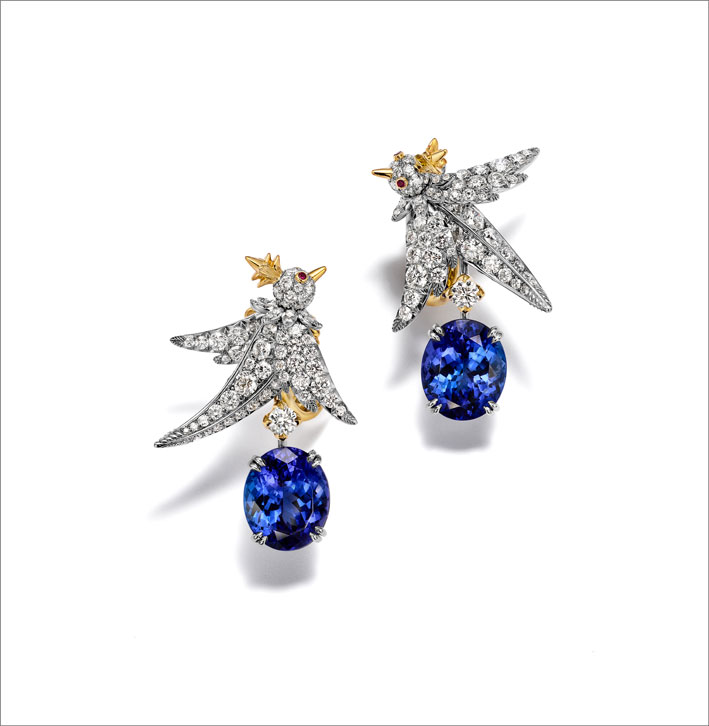
In the next room, the design elements draw inspiration from the furnishings of Gio Ponti, a Milanese designer, architect, and author from the 1930s to the 1960s, creating an atmosphere of modern and refined elegance. Display cases lined with vintage Gio Ponti fabrics contrast with the handcrafted ivory and metal walls, which serve as a backdrop for some of Tiffany & Co.’s most extraordinary jewelry, including the legendary creations of Jean Schlumberger.
An exhibition of archival pieces leads visitors through the history of Tiffany & Co. The installation, created with jewelry selected from the Tiffany Archives, features iconic works by Jean Schlumberger, including the Tulip necklace designed in 1959 and a Bouquet brooch from 1952–1953.

The staircase designed by Hugh Dutton & Associés leads to the mezzanine, dedicated to fine jewelry and additional archival jewelry pieces. Furnishings, such as custom-made Venini sconces in various shades and display cases set into the textured, metallic-toned ivory walls, invite exploration and discovery. This space houses jewelry from the Tiffany Archives, created under the direction of Louis Comfort Tiffany. The display, which highlights his use of color and passion for craftsmanship, includes a necklace by Meta Overbeck from 1930–1933 and a necklace by Thomas Winship from 1914.
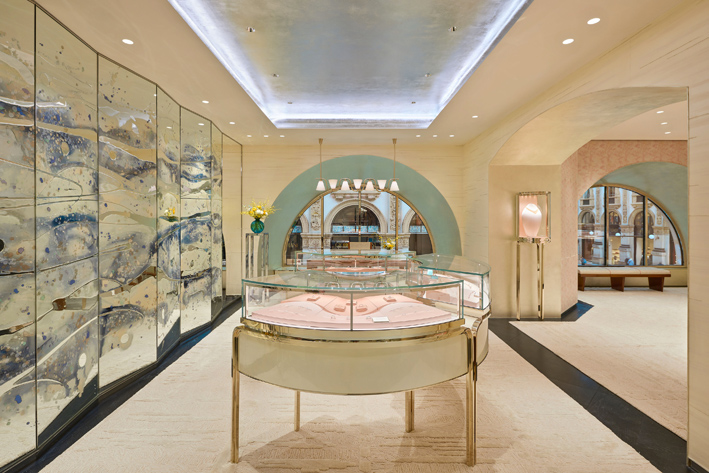
The second floor of the store houses the watches, the private salon, and the All About Love space. The sophisticated and refined watch area was designed in collaboration with Forma Fantasma. The elegant light-wood display cases pay homage to the genius of Gio Ponti. The tactile handcrafted finish of the walls in metallic and ivory tones, the soft carpeting, and the custom-made display case covered in vintage Rubelli fabric, created specifically for this boutique based on Gio Ponti’s design using ancient hand-crafting techniques, highlight the refined precision of Tiffany & Co. watches.
The All About Love space houses the legendary Tiffany Setting engagement ring—an object of desire and the ultimate expression and symbol of love. The interiors feature a platinum-leaf-covered ceiling and ivory and silver walls, reminiscent of the delicacy of a wedding dress. Custom-made panels by artist Nancy Lorenz contribute to the sophisticated atmosphere of this space. The parchment-covered niche inspired by Jean Michel Frank, which houses a Gio Ponti bench, is an invitation to be embraced by the space and immersed in the emotion evoked by the All About Love experience.