
Fewer jewels than in 2013, which set a record. However, in the first quarter of the year, global demand for jewelry remained strong. This is indicated by data from the World Gold Council. Demand for gold jewelry continued its growth path, with an increase of 3%. Demand in terms of value was equivalent, from January to March, to 23.7 billion dollars. Excluding the 2013 quarter, this is a higher figure than the average of the last five years: 22.7 billion. The cost of gold, which decreased, and a general recovery of the economy encouraged purchases. Much of the credit goes to Chinese consumers, who generated the greatest increase in volume of demand for jewelry. The proximity of the Chinese New Year to Valentine’s Day boosted consumption: in China, purchases were 10% higher year-on-year. Not only that: in Indonesia and Vietnam, demand increased by 9% and 3% respectively. In contrast, the biggest decline was in India, with a 9% drop in demand. In addition to restrictions on gold imports, Indian consumers faced additional headwinds, such as uncertainties surrounding the country’s gubernatorial elections. In addition, restrictions were imposed on the free movement of cash and other assets, such as gold, for the duration of the elections. It was a different story in the United Arab Emirates, which recorded its highest level since 2008. But overall, demand was positive across the Middle East. Egypt saw growth of 6%. In contrast, Turkey saw a 12% decline due to the devaluation of the Turkish lira, which led to a sharp increase in gold prices and discouraged jewelry buyers.
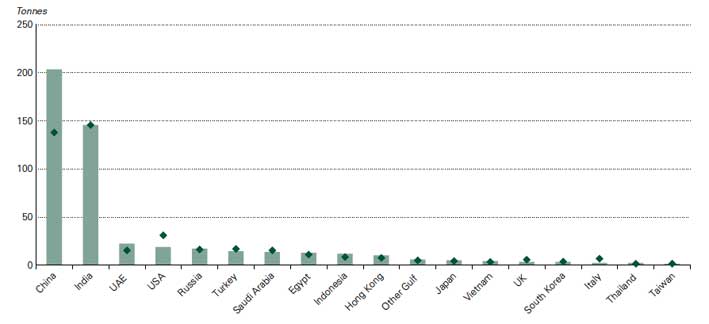
In the West, consumers in the United States and the United Kingdom responded positively to lower gold prices and economic recovery. Jewelry demand in the United States increased by 5% despite the snowstorms that raged during the winter. In Russia, the ongoing economic slowdown, combined with further depreciation of the ruble and geopolitical tensions, have led to a nominal reduction in demand.