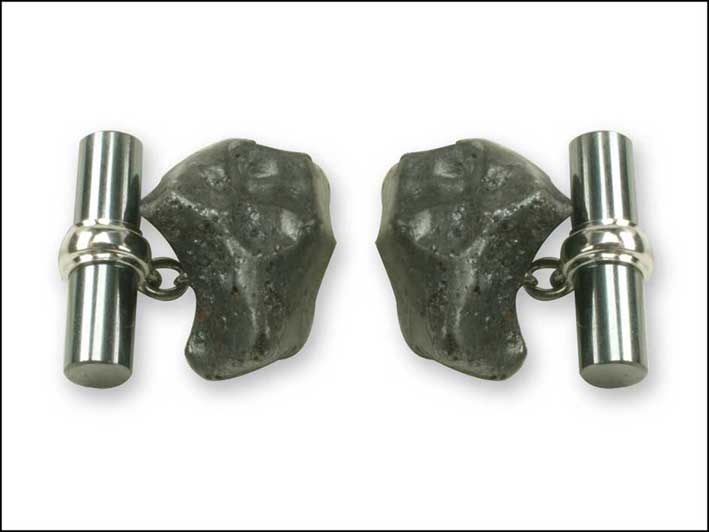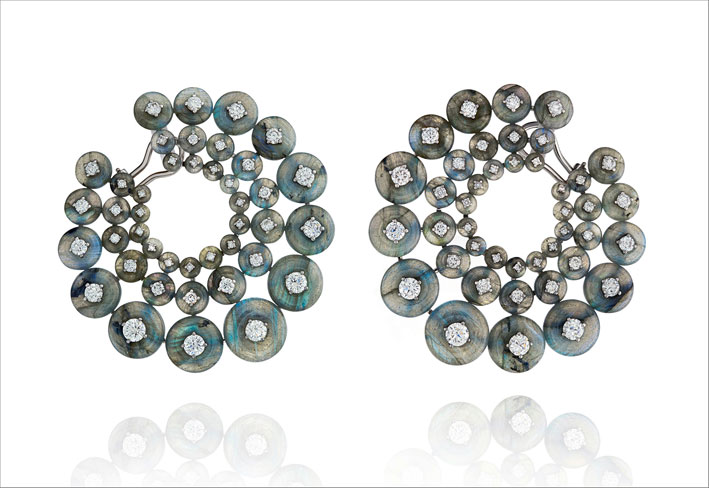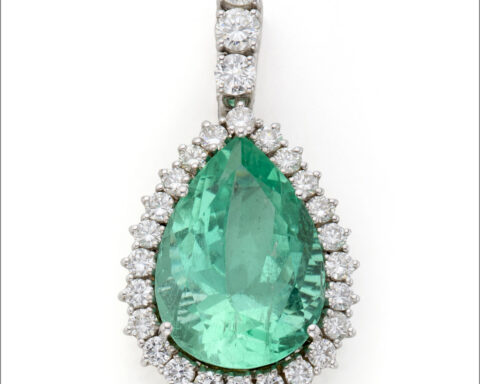
Stones and fossils that transform into wonders and jewels. The idea may seem strange, but you only need to visit the Galleria Gracis, in Milan, to change your mind. An exhibition, in fact, combines fossil finds and gems used for the high jewelry creations of the Villa maison in Milan. Ancient remains and evidence of our geological past that inspire the creation of cufflinks, Villa’s specialty. The organizers also point out that Villa and Gracis, as if to say cufflinks and England, are joined by a gold filigree thread, which is known as the oldest pair of cufflinks (4th-5th century AD) and found in 1992, in Suffolk, in the English countryside. Cufflinks are now quite rare, but for this very reason they have become a distinctive sign much more than in the past. In the nineties, Marco and Filippo Villa have greatly renewed the repertoire of shapes and colors of cufflinks. And the use of stones proves it, between Brazilian amethyst crystals or citrine quartz, small and colorful geodes of carnelian and chalcedony used for as many pairs of twins. And even small meteorites and irregular stones, of an almost lava black, of the Smile twins. The history of Villa, in Milan, is tied to tradition: Benvenuto Villa founded his first atelier in 1876. Goldsmith, sculptor and alchemist, he received prestigious awards at the Universal Exhibition in Paris in 1889 with a decomposable silver sculpture that was ahead of its time.