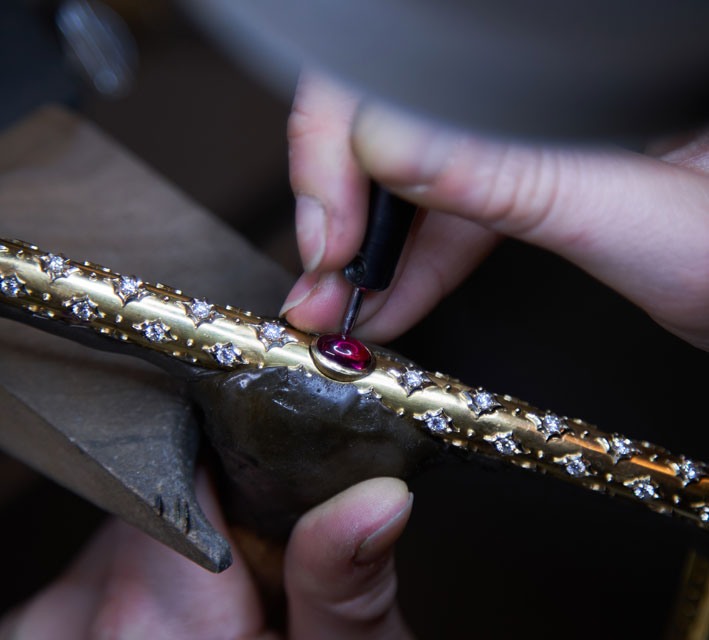
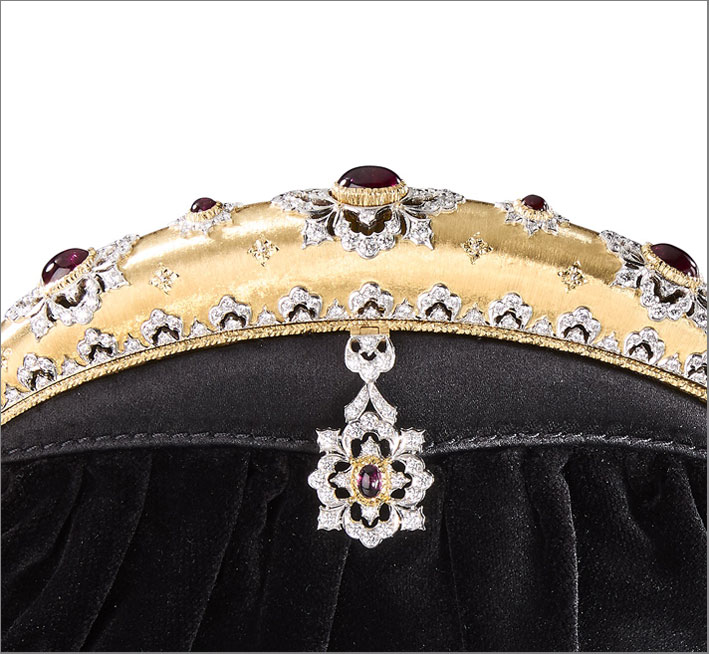
High jewelry bags. This is the idea already proposed by Mario Buccellati in the 1920s and 1930s, which the Maison is now re-proposing with new models. In short, jewelry is applied to an object to be used for special occasions. The novelty was presented in Paris: the new bejewelled bags are a way to underline the artisanal skill of the Milanese brand. And also a tribute to the creative intuitions of Mario Buccellati, who created small cosmetic bags in fabric, gems and gold embroidery. Now Andrea Buccellati has created a capsule collection composed of three cosmetic bags, which take inspiration from the iconic shapes of the past.
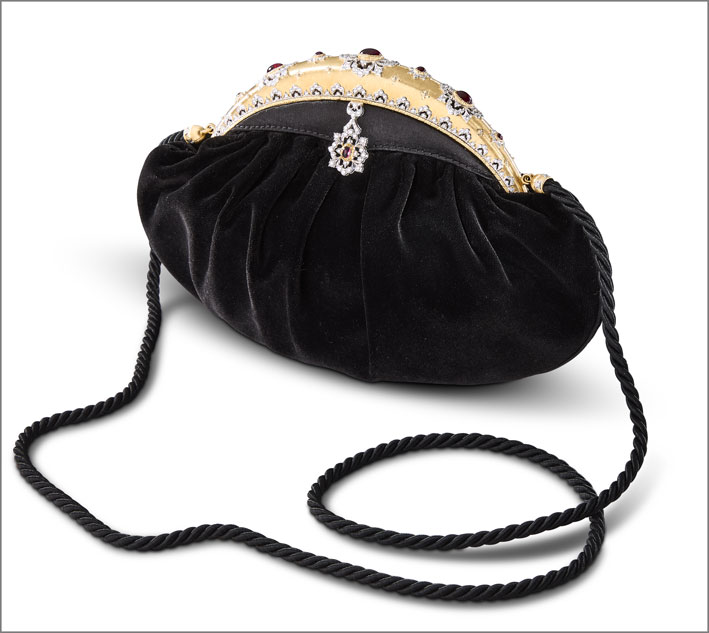
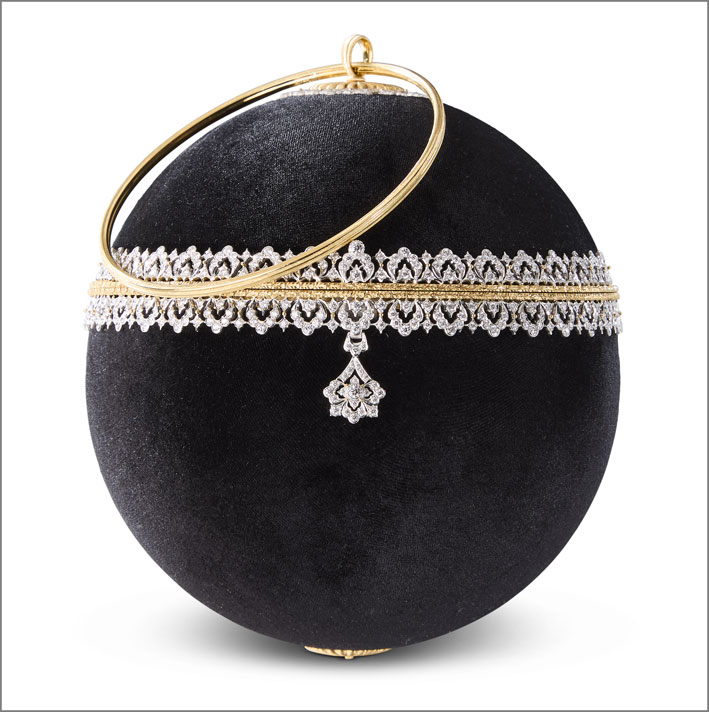
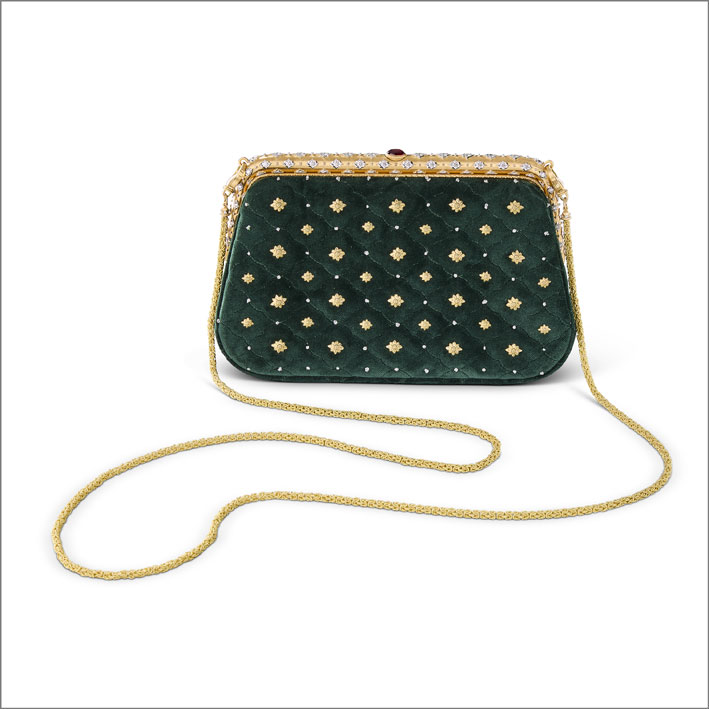
The inspiration also came thanks to the repurchase and restoration of several evening bags which, in 2024, became the subject of an entire room of the exhibition The Prince of Goldsmiths. Buccellati Rediscovering The Classics, in Venice, on the Giudecca Island. The mini collection includes a rectangular green velvet pouch sewn with a matelassé effect and an opening ponsoir highlighted by a cabochon rubellite, a black velvet pouch with a clasp decorated with diamonds and rubellites, further embellished with a small Opera pendant. There is also a spherical black stretch velvet pouch, decorated with a double row of triangles and garlands with diamonds and a circular handle in yellow gold
The history of Buccellati evening pouches dates back to the 1920s and 1930s, when the Maison proposed elegantly embroidered bags decorated with gold and precious stones, which became fashionable among the ladies who frequented the Teatro alla Scala in Milan, next to the goldsmith’s workshop. Mario Buccellati chose very soft velvets and oriental silks, then entrusted them to expert seamstresses to transform a functional element such as the clasp of a bag into a jewel rich in decorations and creativity. In the Cinquenata years, Mario Buccellati was able to re-propose the jewelry bag for the American public, with a more linear design and different materials: rigid cosmetic bags, mostly rectangular, reworked with hand engraving and soft surfaces like fabrics. Later, his son Gianmaria created them with a more geometric design, sometimes abolishing the use of fabrics in favor of engraved gold and silver, so they were more called evening cases rather than real handbags.