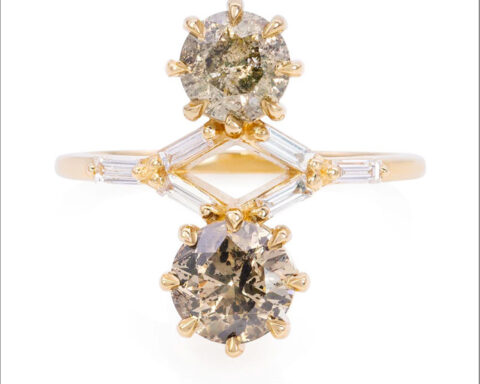

It is blue like sapphire, precious like an emerald, desired like a ruby: can you recognize a tanzanite, stone of the month of December? And can you tell why it is called that? Read here.
From the name, tanzanite, it is easy to guess the origin of the December birthstone: Tanzania, a country in Africa. Linked to the Masai culture since ancient times for its intense blue color, this gem is considered sacred by that warrior people. Its name is rather recent, because it was coined in 1969 by Henry Platt, vice-president of Tiffany, who launched it on the international market. Today tanzanite is highly appreciated for its intense color and is used by many jewelers.

Characteristics: from a mineral point of view it is a zoisite, while from a gemological point of view it is the unique color that makes it so interesting. In fact, each crystal has blue, red-violet and bronze tones depending on the amount of chrome and vanadium present in it. The shade of the stone is the combination of these three colors. Because the deep blue is the most valuable, at the time of cutting you look for the angle with the strongest blue color. But the operation must be done by expert hands, because it is a stone with a split in one direction and is easy to chip, as it is relatively soft. The different nuances are also linked to the type of light with which the stone is illuminated. The blues appear more evident when tanzanite is viewed under fluorescent light, the purple hues are more easily seen under incandescent lighting.
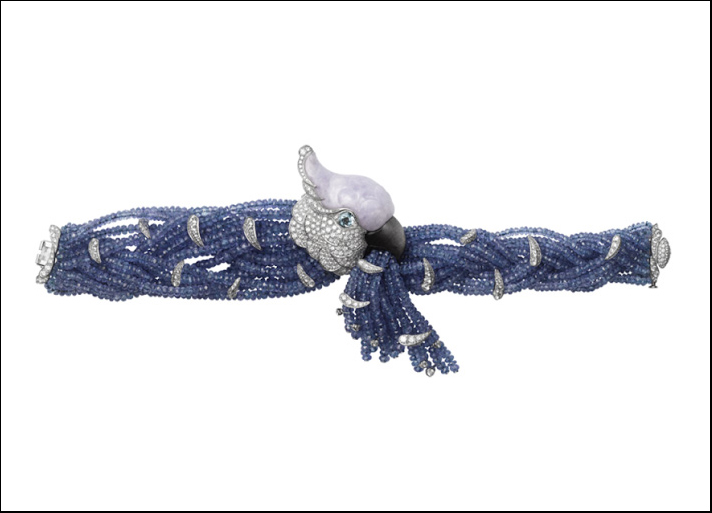
Color: its famous blue is inimitable. It has a purple tinge and then a purple that is lower than that of amethyst and superior to that of blue sapphire, to which it resembles, even if it is less harsh. All natural stones are heat treated to eliminate the most opaque gray, greenish or brownish tone. There are also yellow, green, orange, pink and bicolor blue-green specimens.
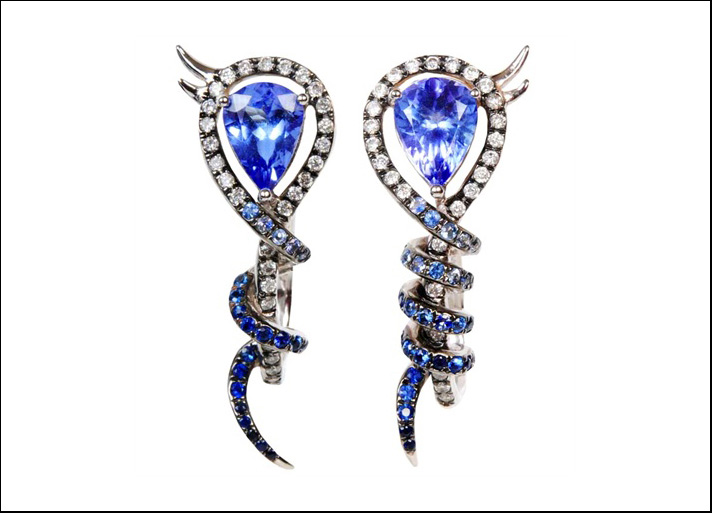
Where it is found: tanzanite is extracted in the only deposit in the world, in the Simanjiro area, in the Manyara region, in Tanzania. It is a mining area only 7 kilometers (4.3 miles) long and 2 kilometers (1.2 miles) wide. This is also why the stone is considered very valuable and quite expensive.
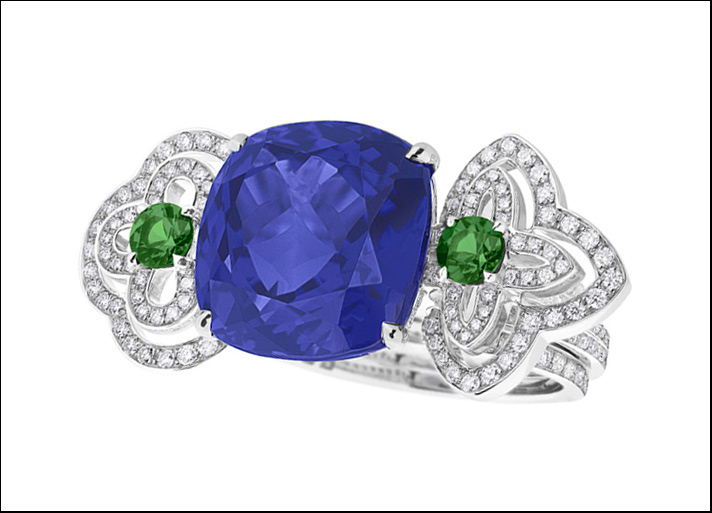
Evaluation: usually the stone is without inclusions visible to the naked eye and is not even noticed with the magnifying glass: it generally has a good degree of purity. Two important aspects because transparency and absence of inclusions enhance its color.